Monday, 8 December 2014

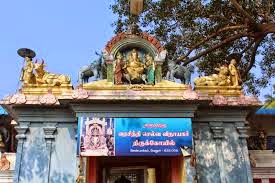
Yoga Narasimha Temple is in Sholingur Tamil Nadu


     Yoga Narasimha Temple is in Sholingur


 மிக்கானை மறையாய் விரிந்த விளக்கை என்னுள்


புக்கானை புகழ்சேர் பொலிகின்ற பொன்மலையைத்

தக்கானை கடிகைத் தடங்குன்றின் மிசையிருந்த

அக்காரக் கனி"யை அடைந்துய்ந்து போனேனே - திருமங்கையாழ்வார்

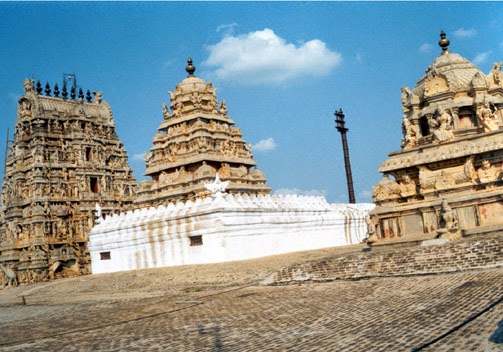
Sri Yoga Narashimha Swamy temple at sholingur in vellore District is a famous pilgrimage spot.It is believed traditionally that worshipping the lord at this temple would relieve the devotees from various ailments.Especially those who suffer from mental illness and evil spirits visits to this temple for special worship and many of them have experienced the relief from their sorrows.(Matrimonial Matching Success - Issueless(childless) Couples are blessed by the Lord) Sholingur village has two hills on which the temples are started.On the main hill,which has 1305 steps and is about 750 feet high,the temple of sri Yoga Narasimhar with goddess Amruthavalli is situated.There is also a Temple for Sri yoga Anjaneyar on the small hill, which is about 350 feet High. The temples will be Open between 8 am to 5.30 pm

 It is believed that Moksha is certain for those who stays for just 1 kadigai (24 minutes) at this place. Saptarishis desirous of having darshan of Nrisimha performed Tapas here and were rewarded within one kadigai. Hence this Kshetra is called Kadikachalam and Tirukadigai.  This is an important prathana sthala. People come here for warding off evil spirits.e hill (500 ft) is Yoga Narasimhar (Akkaarakani) seen in seated posture facing east.

Thaayaar - Amruthavalli.
Theertham - Amrutha Theertham, Thakkan Kulam.
 There is a popular belief that worhsip at this sthalam will rid devotees of diseases and mental disroders.
The utsavar at the foot of the hill is Bakthavatsala Perumal (Thakkan). There is a sannadhi for Adikesava Perumal behind the utsavar. There are also sanndahis for Andal, Erumbiyappa, Thottachariyar.
The Anjaneyar on the smaller hill is Yoga Anjaneyar with Changu & Chakram (four arms), Who is facing West - Worshiping Lord Narasimha.


Saturday, 6 December 2014

Ulagalanda Perumal Temple


 Ulagalanda Perumal Temple, Kanchipuram


35 feet high idol - Ulagalanda Perumal Temple, Kanchipuram, India

Ulagalanda Perumal temple, situated very near to the Kanchipuram bus stand, is one of the most important temples of Kanchipuram, the city of thousand temples. The temple is famous for the gigantic image of the main deity.

The main shrine of the temple is dedicated to Trivikraman. Vamana is an incarnation of Lord Vishnu. When Vamana took a large image of himself, he is referred as Trivikrama. Lord Vishnu has taken 25 incarnations. Of them, you can find temples mainly for three incarnations - Rama, Krishna, and Narasimha. The temples for other incarnations are found very rarely. This is one of the rare temples dedicated to Vamana (Trivikrama) incarnation of Lord Vishnu. In the main shrine, you can find 35 feet long idol of Lord Trivikrama in standing posture with his left leg raised aloft to indicate that his one step has measured the sky. His right leg rests on the head of Mahabali (the demon king).The deity is made up of stucco (sudhai in Tamil language). You can also find the Utsava idols of Lord Vishnu along with his consorts Sri Devi and Bhoo Devi in the same main shrine.The God in this main shrine is also referred as Peragathan, and this main shrine is considered as one of the 108 Divya Desams (108 most popular temples of Lord Vishnu).

On the right side of the main shrine, there is shrine referred as Ooragam dedicated to Lord Vishnu on top of snake Adi Sesha. The word Ooragam refers to serpent.

The temple has three roundabouts (prakaras). The second prakara has a shrine named Neeragam where the Lord Vishnu is referred as Tiru Niragathan aka Jagadeeshwara. The Lord is seen in a standing posture with four arms. The Lord is found along with his consort Nilamangaivalli or Nilamangaivalli Nahiar. Only the Utsava idols (metal idols/procession idols) are seen here and the whereabouts of the main stone idols are not known. This shrine is considered as one of the 108 Divya Desams.

The third prakara has another shrine named Karagam. Lord Vishnu referred as Karunakara is see seated on Adi Sesha along with his consort Padmamani. This shrine is considered as a separate Divya Desam. The details of the original temple and stone idols are not known; only utsaval idols are present now.

The third prakara also houses another shrine - Tiru Kaarvanam, where you can find Lord Kaarvannnan aka Navaneetha Chora (Vishnu) in standing posture with four arms under the Pushpaka Vimana. His consort is found along with him and is called Kamalavalli. This is another separate Divya Desam. Only Utsava idols are present here and the whereabouts of main idols are not known.

There is a separate shrine dedicated to Goddess Aaranavalli Thayar in this temple.

This architecturally beautiful temple has a unique feature of having four Divya Desams in the same complex. When you visit Kanchipuram, you must definitely visit this divine place.


Highlights:
1) One of the most important temples in Kanchipuram city
2) Four out of 108 Divya Desams are present in the temple (108 most important temples of Lord Vishnu)
3) A temple dedicated for Vishnu's incarnation Vamana/Trivikrama (which is rare)
4) The gigantic image of 35 feet high deity


Shenbakkam Selva Vinayakar Temple - Near Vellore


Shenbakkam Selva Vinayakar Temple - Near Vellore


Shenbakkam, a small village near Vellore, on the route of Chennai to Bangalore in South India, is famous due to its rare temple dedicated to Lord Ganesha.

Lord Ganesha, the son of Lord Shiva, is named as Selva Vinayakar in this temple. Shenbakkam Selva Vinayakar temple has totally 11 Pillayar (Ganesha) idols. The highlight is not the number of idols but the shape of those idols. All the idols are shapeless and formless. They are considered as Swamyambu - meaning which formed on their own. You cannot find a proper shape for any of those Ganesha idols. That is the highlight of this temple.

The original name of the village was Shenbagavanam as there used to be a lot of Shenbaga trees. The name got diluted to Shenbakkam later. As per a legend, Adi Shankara on his way to Virinjipuram Margabandeswarar temple visit, he came to this site and installed Sri Chakra. However, the Chakra is nowhere found in the current temple. It is also believed that all the idols were buried into the ground in due course. It is believed that the axle of the chariot of a Marati minister named Thukoji broke down here and the blood was oozing out from the ground. Ganesha appeared in the dream of Thukoji and disclosed his presence. Thus, the idols were discovered and the temple was built.
 

Shenbakkam Vinayakar temple has a tank outside the temple structure and a small tower. Munjur (mouse) is the vaahan of Ganesh. In this temple, in front of 11 swayambu Vinayak idols, there are four mice and one elephant standing as vaahans. Another highlight of the temple is that the flag staff is present right inside the main shrine. Behind the 11 Vinayak idols, there is a shrine where Meenakshi, Sundareswarar, and Mariamman are found. The temple also houses the idols of Dakshinamurthy, Nalvar, Chandikeswarar, Viswanathar, Vishalakshi, Dakshinamurthy, Vishnu and Murugan with Valli-Devasena. There are a lot of "sudhai" idols in the temple walls depicting various forms of Ganesha. Some of them are really rare forms such as Five faced Ganesha, and Ganesha on peacock. There is a shrine where all the metal utsav idols are kept. Navagraha is also found in the temple.

Friday, 5 December 2014

THIRUCHENDUR MURUGAN TEMPEL


THIRUCHENDUR MURUGAN TEMPEL


About the temple

The temple is among the six popular temples (Arupadai veedu) of Murugan and located just off the sea shore in Tiruchendur. The presiding deity of the temple is Lord Arumugan. The place is one among the places where Lord Muruga camped with his army to defeat the demon called Surapadma. Since Lord Subramanya/Muruga wanted to pray to his father Lord Shiva after the Sura samharan, he is seen in the temple worshipping Shiva. One km long roof has been built from the town to the temple for protecting the devotees from hot sun and rains while coming to the temple.


How to reach

Tiruchendur is around 40 kms from Tuticorin and 60 kms from Tirunelveli. Tirunelveli is well connected with other cities by train and road. There are buses and train from Tirunelveli and other important cities in Tamilnadu to Tiruchendur. The nearest airport is Madurai.

Sannadhis

Lord Arumugan/Subramanya/Murugan
Dakshina moorthy
108 lingas
Arunagirinathar
Mel vasal Vinayaga
Ranganathar with Gajalakshmi, Sridevi, Bhoodevi and alwars
Nayanaars
Valliamman
Vedapuriswarar
Chandiswarar
Natarajar
Bhairavar
Saneeswarar
Parvathi amman
Kariyamanika vinayagar
and many more..

Specialty of the temple

As compared to the normal tradition of the Raja Gopuram in the east direction, the temple's raja gopuram is in the western side. This was done to protect the foundation since the sea is closer to the temple in the east.

There is a small well called Nazhikinaru from where the water keeps oozing out and the water is sweet. It is interesting to note that the water is sweet inspite of being so close to the sea.

Temple timings

The temple is open from 5 am in the morning to 9 pm in the evening.

Temples in proximity


Thursday, 4 December 2014

MADURAI MEENAKSHI TEMPLE


MADURAI MEENAKSHI TEMPLE

FULL VIEW


RAJAGOPURAM

MEENAKSHI AMMAN

POTRAMARAIKULAM

HALL OF THOUSAND PILLAR


MUSICAL PILLAR
ABOUT THE TEMPLE:

Arulmigu Meenakshi Sundareshwarar Temple (often called Meenakshi Amman Temple) is situated in the heart of the Madurai City, covering an area of 17 acres, the entire city being built around it.
Lord Shiva as Sundareswara or the Lord of beauty. The other sanctuaries is dedicated to Meenakshi, the wife of Shiva. Meenakshi is seen holding a parrot and a bouquet in her hand. The original temple created by Kulasekara Pandyan in the early years was in ruins. The present temple was reconstructed in the early 17th century by Tirumala Nayak. The temple is surrounded by Aadi, Chittiraj and the Massi streets.

Meenakshi (Meena meaning fish and akshi meaning eye) is the principal deity of the temple, and not Sundareswarar - this is unlike most Shiva temples in India where usually Shiva is the principal deity. And legend has it that Madurai is the actual place where the wedding of Shiva and Meenakshi took place. The Meenakshi temple complex is one of the largest and certainly one of the most ancient in the world. In fact it was in the list of top 30 nominees of the “New Seven Wonders of the world”. The temple is situated in the heart of the city covering an area of 17 acres, the entire city was built around it.

       Contrary to the custom followed in all the major temples of Tamil Nadu Goddess Meenakshi (meaning fish eyed) is worshipped first by the devotees in this temple. In other temples the male deity will be worshiped first. Here Arti/Deeparadhana is done to Meenakshi first.
        Meenakshi was born with three breasts. The Pandya king and the queen, who were her parents, were told that the third breast will disappear when she sees the right man. This happened when she met Lord Sundareswarar (Shiva). Even today a statue with three breasts can be seen in Pudumandapam opposite temple.
The lady goddess Meenakshi is the principal deity of the temple and not Sundareswarar - this is unlike most Shiva temples in South India where Shiva is the principal deity.

Meenakshi:-

Devi Meenakshi, the fish-eyed Goddess, who stands with a parrot and a bouquet, radiating love and compassion. The sublime grace of the divine Mother and her infinite mercy are beyond words.
The Meenakshi’s idol is beautifully carved and her diamond nose ring dazzles in the glow of the oil lamps. She is always dressed in bright silk and looks gorgeous.

Sundareswarar:-

Lord Sundareswarar's shrine is situated in the Northern side of the Kilikoontu Mandapam. There is the idol of Lord Sri Ganesh called as the Mukkurini Pillaiyar. It is believed that the idol was found when the king Thirumalai Nayakar planned to built a tank about 3 kms from the temple. He found the idol and brought the same to the temple and erected it there.

The kadamba tree is present in the outer pragaram of the Lord Shiva's shrine. There is a dancing posture of the Lord present in the Shrine called as the Velli Ambalam which is covered with Silver all over. This is the one of the idol of Nataraja which is called as the Velli Sabhai. There is many Sabhai's present in the temples of Lord Shiva all over the state.
In the next sanctum is the shrine of Lord Nataraja where the Lord is worshiped in the dancing pose with his right foot raised. Adjacent to it is the sanctum of Sundareswarar, which is supported by 64 boothaganas (ghostly hosts), 8 elephants and 32 lions. The Sivalinga, which bears the names of deities such as Chokkanathar and Karpurachockar, inspires deep devotion.

The Musical Pillars:

The Musical Pillars are near the northern tower, and there are five musical pillars each consisting of 22 smaller pillars - carved out of a single stone - that produce musical notes when tapped.

Thousand Pillar Mandapam:-


There is a massive hall in the Meenakshi Amman Temple, which comprises of 985 magnificently sculptured Dravidan columns. Known as the Thousand Pillar Mandapam, this hall also houses an art museum, with a rich collection of icons, photographs, drawings, etc.

Wednesday, 3 December 2014

Sivanmalai


Sivanmalai

Sivanmalai View

Moolavar

Sivanmalai andavar

Andavan Utharavu petti

Golden Chariot


Sivanmalai is located in the Tiruppur District, Tamilnadu. It is 5 kms away from Kangeyam town towards Tiruppur. This Sivanmalai is located in 25 Kms away from Tiruppur and 76 Kms away from Coimbatore. The other names of Sivanmalai are Sivachalam, Sivathri, Shakthi Sivamalai. This town Kangeyam is famous for business coconut products like oil, nutshell charcoal products etc. The main deity of the Sivanmalai is Lord Subramanya Swamy it is the another name of Lord Murugan. The favorite deity of the Tamil people is undoubtedly Murugan, the son of Siva and Parvathi. This temple was build by Sivavakkiyar a famous Sidhhar. It is believed that this temple may be constructed in 12th century.
God’s order box is placed before entering mulavar sanctum. Devotees coming to the temple needs to check what object is placed in the order box. After checking this devotees needs to enter the main sanctum. Lord Muruga is appearing to the devotees dream and ask them to place one object in the order box. (Those objects may be Water, Cloth, Sand, Soil and Gold) That person will bring that object to the temple. To find out that information true or false, they will place the flower in Mulavar sannadhi. Once it is confirmed, that object will be placed inside the God’s order box until the arrival of next object. Pooja’s will be performed to that object on daily basis. This procedure is followed for several hundred years.

Sivanmalai Temple Timings
This temple is opened for dharshan from morning 6am to 11am and in evening 4pm to 8pm. Kartikai asterism and new moon days in each month are considered to be of significance at Sivanmalai. Skandasashti is celebrated in great splendour as in other Murugan temples. Other festivals here include Thai Poosam, Aadi Kritikai and Pankuni Uthiram.
  

Avinashilingeshwarrer Temple Avinashi


Avinashilingeshwarrer Temple Avinashi

Enterence

Goparam & Vimanam's


Avinashilingeswarrer

Old Tamil Stone Inscription

Chariot


Avinashi is one of the celebrated Shaivite temples and is considered as the first of the seven Thevaram Sthalams in the Kongu region. The temple is a about 40 kilometres from Coimbatore and a few kilometers from Tiruppur. The word Avinashi means indestructible and the sanctum sanctorum Lord Shiva stands as the indestructible force here. The temple is also known by its various names, Karunaiyaathaal Kovil (Merciful Mother's Temple referring to Goddess Parvathi the consort of Lord Shiva), Dakshina Varanasi (Varanasi of South), Thirupukkozhiyur. The temple is over 1500 years old and has been sung by Manickavaasagar, Sundaramoorthy Nayanar, Thirumoolar and Arunagirinathar in their respective works.


There are inscriptions that the temple received a lots of endowments from the Cholas and Pandyas. There is even a legend that Sundaramoorthy Nayanar on his way to Thiruvanchikulam to meet the Chera King, Cheramaan Peruman, Sundarar happened to visit Avinashi. While walking through the streets of Avinashi, he heard conflicting voices from two of the opposite houses one blooming with happiness and joy and the other with a gloomy and melancholic voices. Sundarar came to the know the reason for the discordance. He came to know that the incident took place some three years ago, when two boys of the same age went to bathe in a nearby tank and one of them devoured by a crocodile that emerged from the tank.

The surviving boy had his "Upanayanam" (A thread ceremony to mark the beginning of studenthood) held. And so there was joy in that house. While on the other house people were sad because had their boy been alive, they too would be celebrating his "Upanayanam" too.

Sundarar was able to understand the pain of the worrying family and he sung out a soulful song, praying to Lord Shiva to resurrect the dead child. Lord Avinashiappar heeded to Sundarar's prayers. The empty tank started to fill in with water from which emerged the crocodile and regurgitated the child as a fully grown boy of 8 years. And there filled happiness in the other home to as their boy was brought alive. There is a sculpture in the Kodimaram (flag mast) and inside the temple explaining this incident. There is even a temple for Sundaramoorthy Nayanar nearby and the tank, called the Thamaraikulam, from which he revived the boy. The temple is on the shores of the Thamaraikulam and this event is commemorated during the 'Mudalai Vaai Pillai' Utsavam on Panguni Uththiram.

The most special thing of all is the temple's car. It is one of the biggest cars in South India. Same as Thiruvarur, Avinashi boasts the biggest car and the auspicious festivals that are held as done in Thiruvarur. The Avinashi car is known for its fine wooden carvings. The old car was destroyed in the recent fire accident, and a new one was built. The car festival is conducted during the month of Chithirai called the Chithirai Thiruvizha.